

50 Essentials – The Ultimate Jungle Packing List
Travelling to a tropical rainforest or heading out on a jungle adventure is one of the best travel experiences you can have.
When preparing for your trip there is a ton to consider: killer mosquitoes, the hottest sun you have ever encountered, high humidity, local customs, and rough terrain. It’s a lot to prepare for!
I have visited the Amazon Rainforest in South America and gone jungle trekking in a tropical rainforest in Sumatra, and this is what I brought with me or ended up having to source after I arrived.
Use my comprehensive jungle packing list so that you arrive prepared.

Note: This post contains links to products and experiences I enjoy. As an Amazon Associate I earn from qualifying purchases at no extra cost to you. If you want to know more, check out my affiliate disclosure. I appreciate your support
Essential items to pack for a jungle trek or rainforest trip
1. Backpack
A backpack is more suitable for the Amazon rainforest or a trip to the jungle than a suitcase. Suitcases are bulky, and depending on where you enter the jungle, you might have a flight restriction on your luggage.
Wheeled baggage needs to be carried frequently because of unpaved paths, rough terrain, and mud. A good backpack with support for your back will be the best investment.
I recommend the Osprey Fairview 40L backpack for women. I own it, and it’s been a game-changer for my back. They have a men’s version too, the Osprey Farpoint 40L. For a budget-friendly alternative, I used the Hyne’s Eagle 38L Backpack for years and loved it.
Read my full review of the Osprey Fairview 40L for women

Check Amazon Price Osprey Fairview Women’s 40L Backpack
Check Amazon Price Osprey Farpoint Men’s 40L Backpack
Check Amazon Price Hynes Eagle 38L Backpack
2. Day Pack
A small day pack for excursions or jungle trekking. You will be leaving your large backpack or luggage at your accommodations and taking the bare essentials with you. A 20L day pack is the perfect size.
Search For 20L Daypacks on Amazon
3. Reusable Water bottle
You will go through a lot of water, staying hydrated in a jungle. A reusable water bottle will cut down on plastic use and waste.
4. Carabiners
Carabiners are handy for hanging your water bottle from your bag or any other hookable object on this list.
5. Insect Repellent
25 – 30 % DEET was the only thing that worked on the mosquitoes in the Amazon Rainforest. Slathering DEET all over your face sucks, but Dengue Fever sucks more. There is currently no vaccine to prevent Dengue Fever, so you have to be diligent about avoiding insect bites.
I take a travel-sized aerosol of Deepwoods Off! and then back it up with insect-repellent wipes so I don’t exceed the liquid restriction airlines put on carry-on bags.
Check Insect Repellent Wipes on Amazon
6. Headlamp or Flashlight
Headlamps and flashlights are helpful for nighttime and for rummaging in your bag. Headlamps have the advantage of being hands-free. I used to think headlights looked silly, but I now realize they are genius.
Energizer has a headlamp that is also water resistant which I recommend
Check Energizer Head Lamp Price on Amazon
7. Photocopies of your ID and Health Cards
Leave your passport locked up safely at your lodge or guesthouse and carry with you photocopies instead. The risk of important documents getting wet, muddy, or lost is high.
Nobody is going to be asking for your ID anyway unless you need to do a border crossing, and maybe not even then. For example, the border in Leticia between Colombia and Brazil is unmanned.
8. Roll of Toilet Paper or Mini Tissue Packs
On jungle treks, nature is your toilet until you reach the next camp. Tissue packs are convenient to store but a roll of toilet paper in a dry bag will work.
9. Baby Wipes
Baby wipes are my go-to for all camping and jungle treks. Being able to wipe off your hands before having a snack or wipe down your face when you don’t have access to running water is fantastic.
10. Hand Sanitizer
Hand sanitizer is for when you can’t access soap and water. It gives you peace of mind before you eat with your hands. Best used after you use a baby wipe.
11. Ziplock Bag for Garbage
Leave no trace of your passage behind. Repellent wipes, toilet paper, and snack wrappers are examples of the type of garbage you may produce while trekking through the jungle. A sealable bag to carry your small garbage will ensure you leave the jungle the way you found it.
12. Quick Dry Towel
A quick dry towel is either a Turkish towel or a microfiber one. They are lightweight and compact and will fit nicely in the small backpack you bring.
I’m obsessed with my Turkish towel, It is huge, folds up small, and looks cute.
The one I purchased is no longer on sale on Amazon.
Search for Turkish Towels on Amazon
13. Hand Fan
A hand fan is a pint-sized lifesaver in an equatorial forest. It will cool you off and keep the bugs out of your face.
14. Cash
Unless you are in a rainforest city like Leticia, access to ATMs will be unlikely. You may need to pay for boat trips, food and drink, local guides, and souvenirs.
15. Notebook and Pen
Having a written copy of your lodge address and other important information is great for when there is no cell service. Journaling your adventure is fun too.
Sun protection to pack for the jungle or rainforest
16. Sunscreen
Reef-safe sunscreen protects you and doesn’t harm the environment. The equatorial sun is scorching hot, and local stores may not have sunscreen available to purchase. If sunscreen is available, it may not be a high enough SPF or be excessively expensive.
I love Sun Bum sun products, They are environmentally friendly and don’t clog my pores.
17. Sun hat
Protect your head from UV rays with a wide-brimmed hat or baseball hat. Choosing a wide-brim hat will also cast shade on your neck.
For trips that involve riding on boats, like on the Amazon River, have a hat with a tie to keep it from flying off your head
18. Sunglasses
UV-rated sunglasses protect your eyes and accessorize but If you have a favourite pair you might want to leave them behind and grab a budget pair instead so they don’t get damaged.
19. UV Rated Umbrella
For lounging in the jungle’s afternoon sun, bring a UV rated Umbrella. I brought my umbrella to the Amazon rainforest, originally thinking of rain, but it turned out that creating shade was way more useful.
20. Lip Balm
Your lips will be battling the sun and likely some dehydration, lip balm will help them out.

Gear to pack for a jungle or rainforest
21. Digital Camera and Camera Gear
A cellphone camera or a professional camera to take photos of stunning plants and wildlife. A tripod can help you catch some really good shots and act as a stabilizer. I use a small tripod by Lammcou with flexible arms (Gorilla Style) that can be wrapped around branches and poles. The Lammcou is a budget option but it’s lasted me two rainforests so far!

Shop Gorilla Tripods on Amazon
22. Travel Adapter
Depending on the country you are coming from you may need a travel adapter to charge your phone, camera, or other gear while at main lodges or in jungle towns or cities. In the Colombian Amazon, I found compatible North American plugs. Indonesia has European plugs. Research your destination’s power type before you go.
Shop Worldwide Travel Adapters on Amazon
Alternatively, you can purchase the country-specific wall chargers. For example, I own EU phone plugs for Android so I can charge my phone without connecting to a bulky adapter. This option isn’t available for most other devices, though.
Shop Euro Style Wall Chargers on Amazon
Shop North American Style Wall Chargers
Important* Remember that not all travel adapters convert voltage and may not be suitable for use with high-power appliances like hair dryers, curling irons, straighteners, and other similar devices. If you are bringing a high-power appliance, get a voltage adapter
23. Power Bank
On Jungle treks and at remote lodge,s you may not have access to power plugs. I prefer to use a power bank with two charges and solar capability. The solar function has always worked slowly for me but it’s a nice backup.
Search Solar Power Banks on Amazon
Medical requirements for a rainforest or jungle
24. Yellow Fever Vaccine
In the Amazon Rainforest, your yellow fever vaccine is required by law. We were never asked to show our documents, but it’s a good idea to have the required paperwork with you. The yellow fever vaccine is not currently required for Sumatra and Borneo.
25. Other Recommended Vaccines
A travel consultation with your doctor or pharmacist is always a good choice before travelling.
Currently recommended vaccines for the Amazon, Sumatra, and Borneo are Hep A, Hep B, Typhoid, MMR (Measles, Mumps, and Rubella in one shot), Tdap (Tetanus, Diphtheria, and Pertussis in one shot), Influenza, and Rabies
I did not personally get the rabies shot because in Canada it’s a $1000 dollar shot. There are medications available to treat rabies, so I decided to avoid bats and stray dogs and risk it. *Update – Zach did get bitten by a dog in Mexico!
26. Malaria Pills
Low-lying tropical areas are often home to malaria-causing mosquitoes. It’s best to get a travel consultation to get the most up-to-date map of regions at risk.
27. Travel Insurance
Visiting the Rainforest or Jungle is hazardous. The bugs are often carrying some combination of dengue fever, malaria, or zika virus. A natural disaster could happen, or you could just injure yourself. Get quality health insurance.
What to wear to the jungle or rainforest trip
28. Sturdy Shoes
I found no paved paths in the jungle. Comfortable, water-resistant hiking boots or runners are a must.
On my trip to Sumatra, I couldn’t find my hiking runners before I left. I did not follow my own advice and wore a run-down pair of runners. I was slipping and sliding on muddy trails constantly and had wet shoes. I am fortunate I didn’t injure myself!!
29. Long Lightweight Loose Pants
Long loose pants prevent mosquito bites. I was skeptical that pants could prevent mosquito bites because I am used to Canadian prehistoric monster-sized mosquitoes that bite through jeans. Turns out rainforest mosquitoes are small guys, and long loose pants were very effective.
In Sumatra and Borneo, you also need to protect against leeches. Long pants tucked into your socks effectively keep them off your skin.
30. Long Sleeve Shirts
Long sleeves help prevent mosquito bites and protect from the sun. The best options are athletic wear or other fast-drying moisture-wicking clothing, or long sleeve button-up dress shirts, which have the bonus of having collars to protect your neck. Bring at least two pairs so one can dry while you wear the other..
31. Moisture wicking Long Socks
Nobody wants grody, moist feet. This is extra true if you plan on doing some jungle trekking. Wear socks that are long enough to securely tuck your pants into to prevent creepy crawlies like leeches and ants from getting in. I didn’t buy leech socks for Sumatra, and it was fine with my pants tucked in.
32. Breathable Underwear and Sports Bras
You will be doing a lot of sweating, and if you choose to camp overnight, you will be jungle trekking for up to 8 hours a day! Moisture-wicking fabrics are your friend. Pack more underwear than you think you need.
33. Swimsuit and Cover-up
Bring a swimsuit for rivers, waterholes, and jungle lodges with swimming pools. If you are in Sumatra or Borneo, you may want to bring a swimsuit cover-up. Indonesia is a modest Muslim country, and while tourists can get away with almost anything, you will stand out.
34. Camp Clothes and Sandals
A comfy change of clothing for at camp and when mosquito protected. T-shirts, shorts, dresses, and pyjamas. Your trekking clothes will be sweaty and dirty, and you will need to get out of your main shoes.
35. Bandana or Light Scarf
The humidity level is like trying to do activities in a sauna. Wiping the sweat from your brow, or tying one around your head to keep sweat out of your eyes, will make your experience more pleasant. I use thin scarves for sun protection or as a barrier when sitting on logs or the ground.
First aid kit for a jungle or rainforest
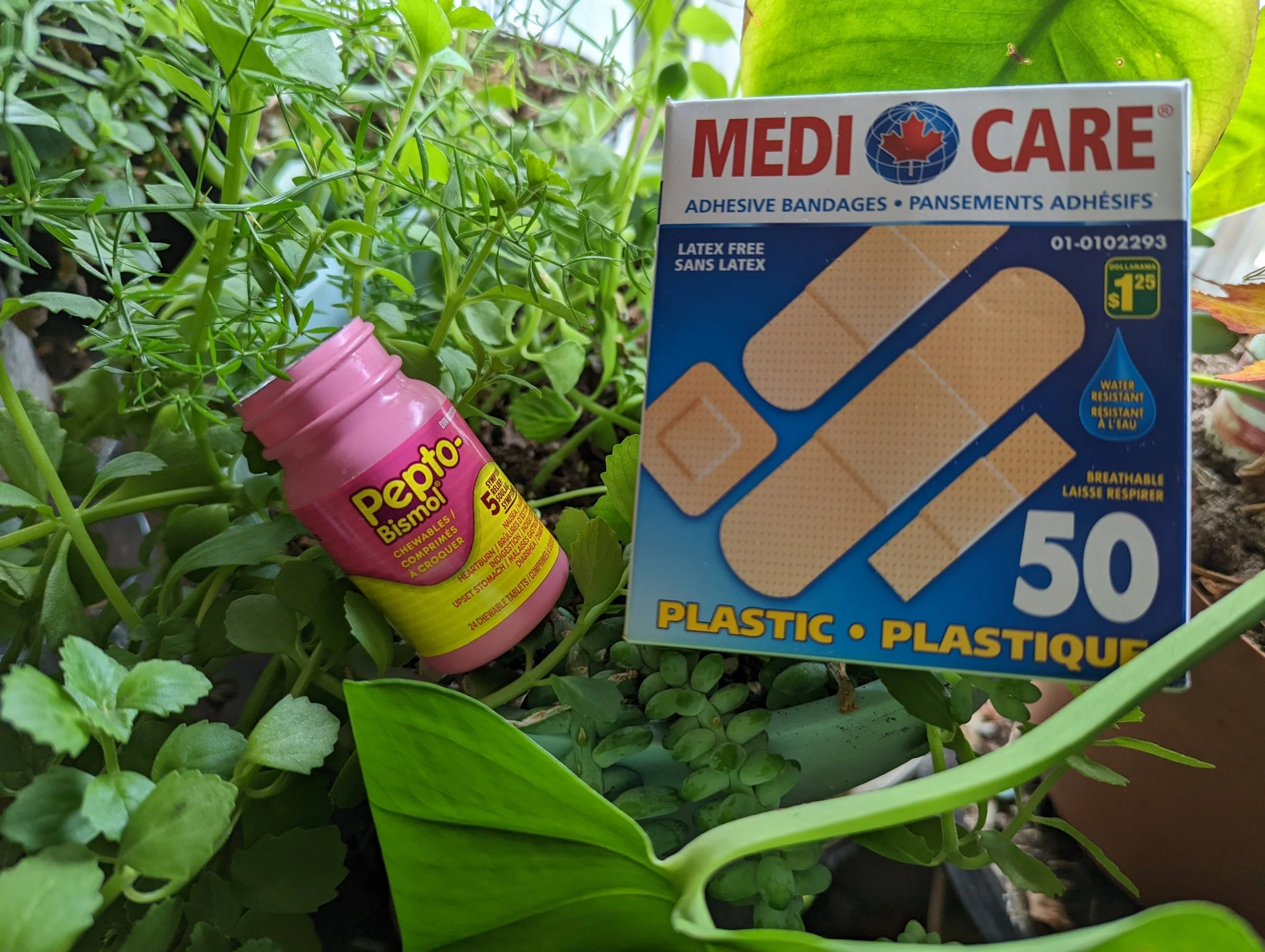
36. Antibacterial Wipes
Wipes for cleaning wounds, wipes are more convenient than sprays due to airport restrictions on liquids
37. Polysporin
Polysporin soothes, helps prevent infection, and speeds healing. It’s a miracle ointment
38. Band-Aids, Gauze, and Skin Tape
You wouldn’t want an open wound in the humid conditions of the jungle.
39. Pepto Bismol
Bring Pepto Bismol or Imodium for stomach issues. My personal preference is Pepto Bismol because it is also good for nausea.
40. Anti-itch Cream
Despite my best efforts, I still got mosquito bites while jungle trekking. Afterbite saved my sanity.
41. Blister Tape
In case your shoes and feet don’t hold up well to the long hikes, this tape will help prevent blisters
Waterproof gear for a jungle or rainforest
42. Poncho
Ponchos are a better choice than rain jackets for the jungle. I found that a rain jacket was too hot and stuck uncomfortably to my skin.
An easy on-and-off quick-drying poncho will can also be worn on top of your backpack
43. Rain Cover For Backpack
Protect your gear and clothing with rain protection for your bag. If you can’t find this then an oversized poncho that will cover you and your bag will do.
44. Dry Bags
A waterproof bag to protect important items. Passport, cell phone, portable battery charger, and money should be stored in your dry bag.
Personal items to pack for a jungle or rainforest
45. Toothpaste/ Toothbrush
A necessity for any trip, in Indonesia, most accommodations provided us with individually wrapped toothbrushes, which was odd but great, I wouldn’t count on that though.
46. Soap and Shampoo
A bar of soap is lightweight and spill-proof. Dry shampoo is also a popular choice.
47. Grooming products and Feminine Products
Small communities may not carry the type and brand of product you use. Best to bring your own.
Debatable items
48. Rubber Boots
Rubber boots take up so much room in your backpack and can be found readily accessible from accommodations and local stores in rainforest communities. If you have an amazing pair and room to bring them, go ahead. Rubber boots do provide a modicum of snake bite protection.
Bonus items
49. Binoculars
Binoculars are a luxury item, but it’s awesome to try and spot birds up close or to zoom in on a Gibbon from across a chasm.
50. Entertainment
Our guide entertained us with matchstick games. You might want to bring a book, cards, or an offline game to fill your evenings at your jungle lodge or camp.
Travelling to a rainforest or jungle requires preparation, a sense of adventure, and a willingness to endure some discomfort. This jungle packing list will help you prepare and have a safe and fun trip.
Want to know what the jungle trek in Bukit Lawang is like?
Check out my post Jungle Trekking in Search of Orangutans. or
25 tips for a successful Bukit Lawang trek in Sumatra
If you are interested in heading to the Amazon Rainforest check out:
How To Visit The Amazon Rainforest from Colombia.
Thanks for reading my Ultimate Jungle Packing List. I have fallen in love with jungle and rainforest trekking, and I hope you do too.
Have a fantastic day and Live Self Happy!


Loved your list here for jungle hiking, but I would like to add one thing. We have traveled extensively to Central America and hiked often in the jungle there. The native populations there tend to wear knee high rubber boots while in jungle in all weather conditions, not because of muddy conditions, but as snake bite protection. We will soon be relocating to Costa Rica from Alaska and had every intention of leaving our extra tuffs behind. But after observing the locals, I can see why they choose to wear boots. Now I’m not suggesting that anyone spend all day hiking in knee high rubber boots, however, I’d keep in mind that you want as much of your lower legs covered as possible. Just a thought. Have a great day and thanks again for your thoughtful list.
Thats an awesome insight, thanks for sharing. I’ll research this and then update. My guide in Sumatra had runners, long pants and soccer socks on, the concern seemed to be leeches, not snakes. I can’t remember what our guide in Colombia had on though. Definitely a reason to consider boots
This is spot on!. I put this on my Twitter and my audience loved it!
Keep up the great work. 🙂
I am glad this was helpful for your audience. Thanks for sharing.